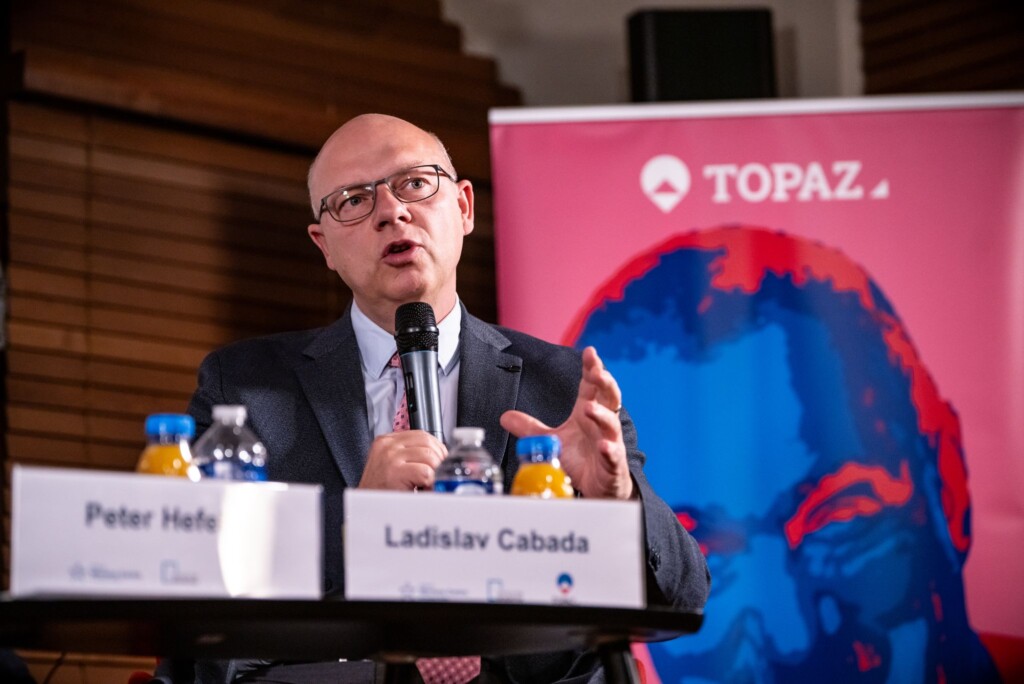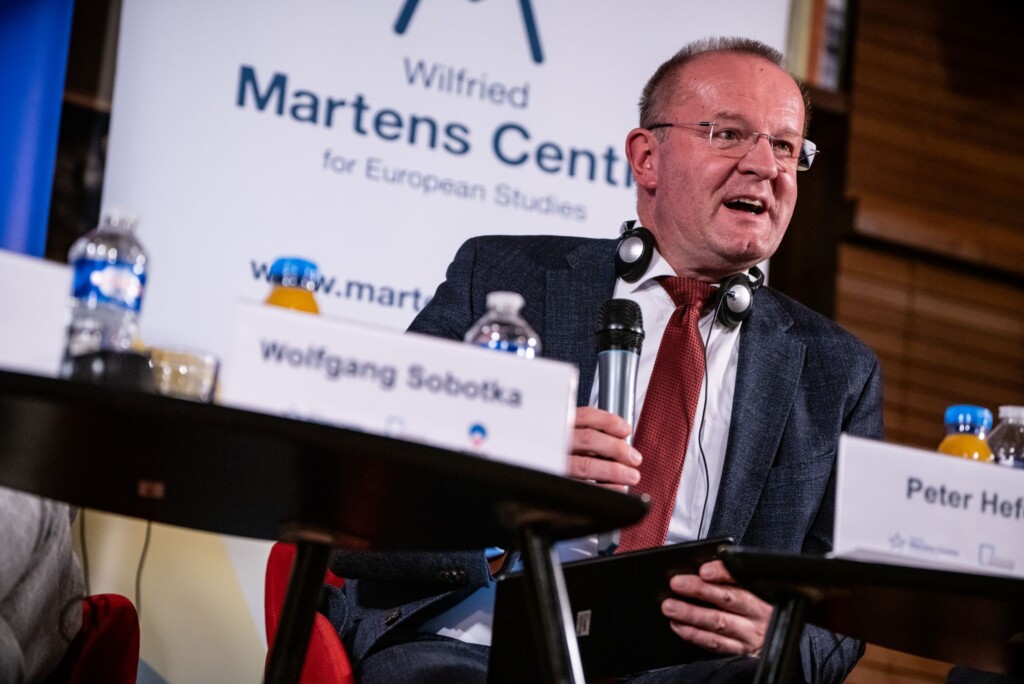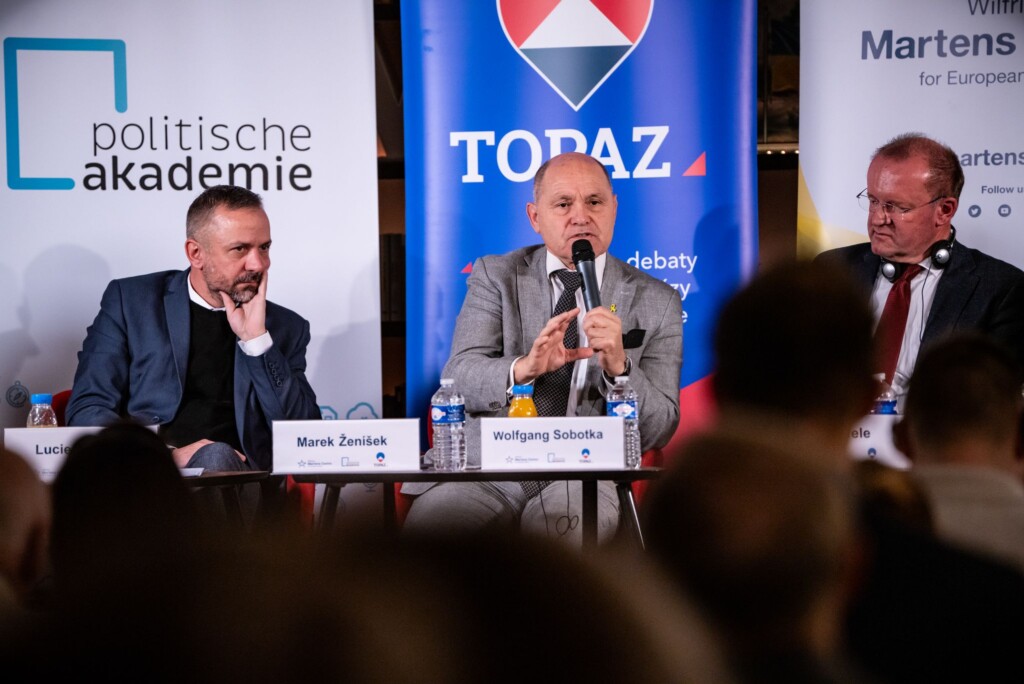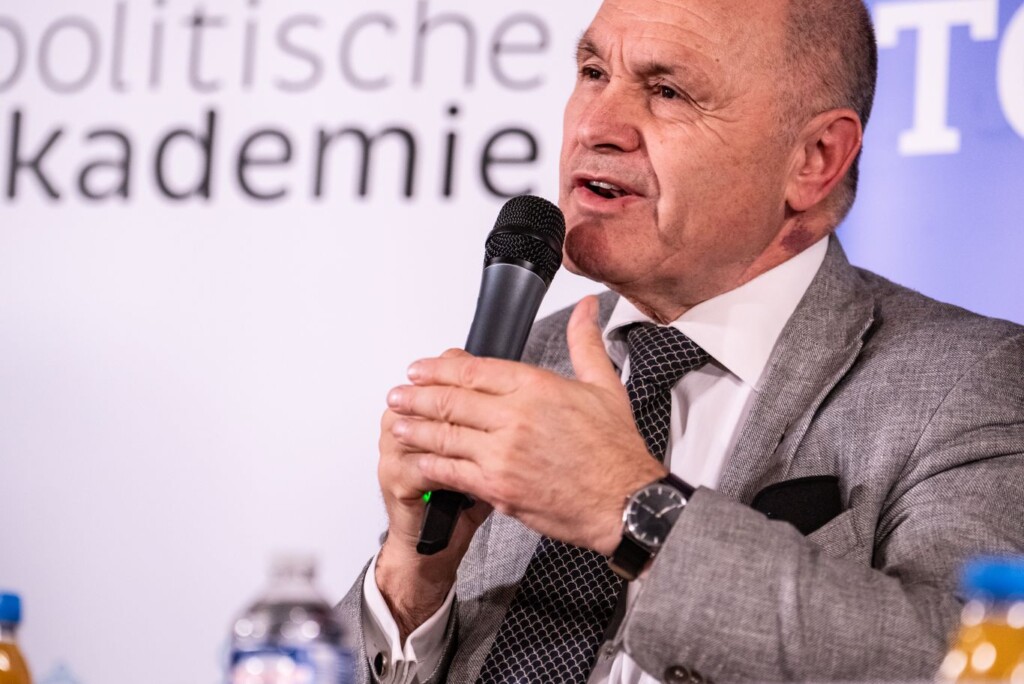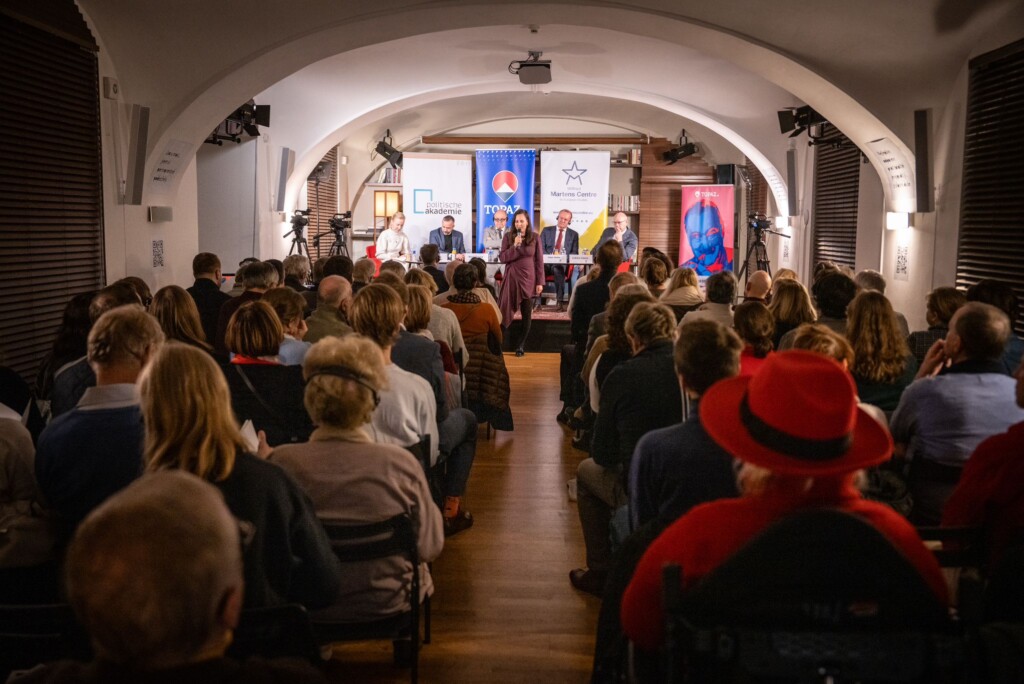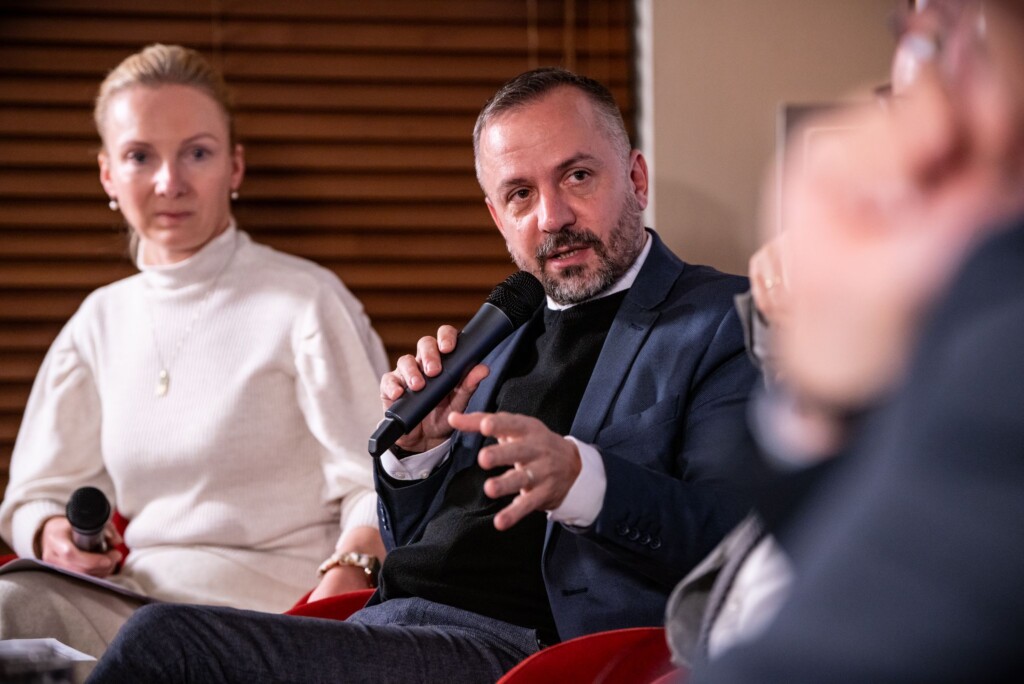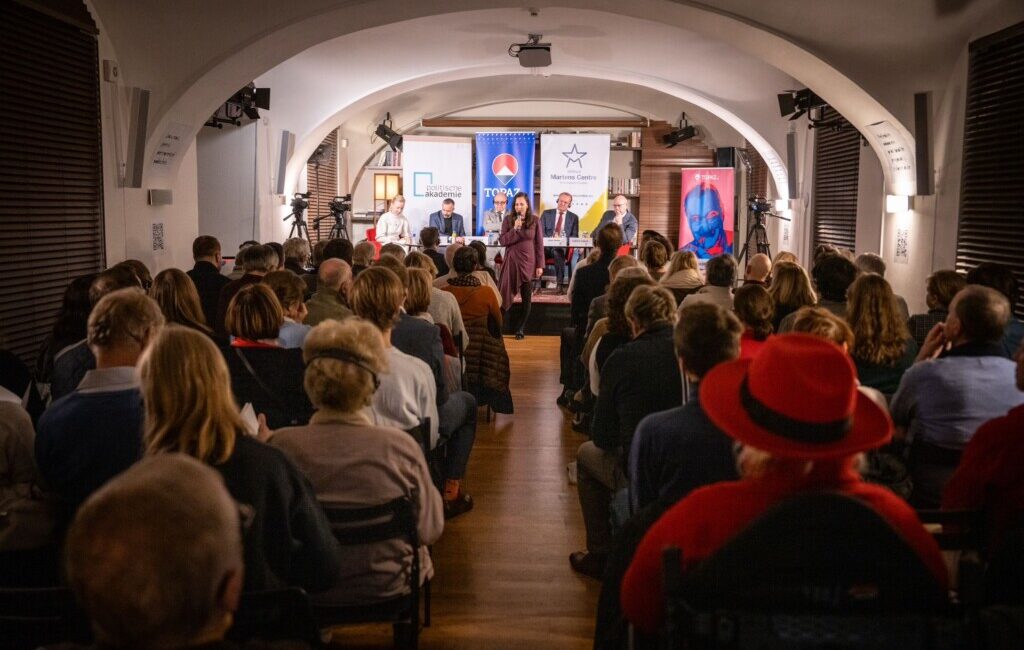
This year marks 35 years since 17 November 1989. That day began the difficult journey towards freedom and democracy, towards values that many people take for granted today but for which others risked their lives in the past. In this context, and as part of the launch of our new publication "Resilient Central Europe: the road to a secure future." "Resilient or toothless? Democracy versus populism in Central Europe." The event, which we held at the Václav Havel Library on 13 November in cooperation with the Wilfried Martens Centre for European Studies and the Politische Akademie, was attended by nearly seventy visitors.
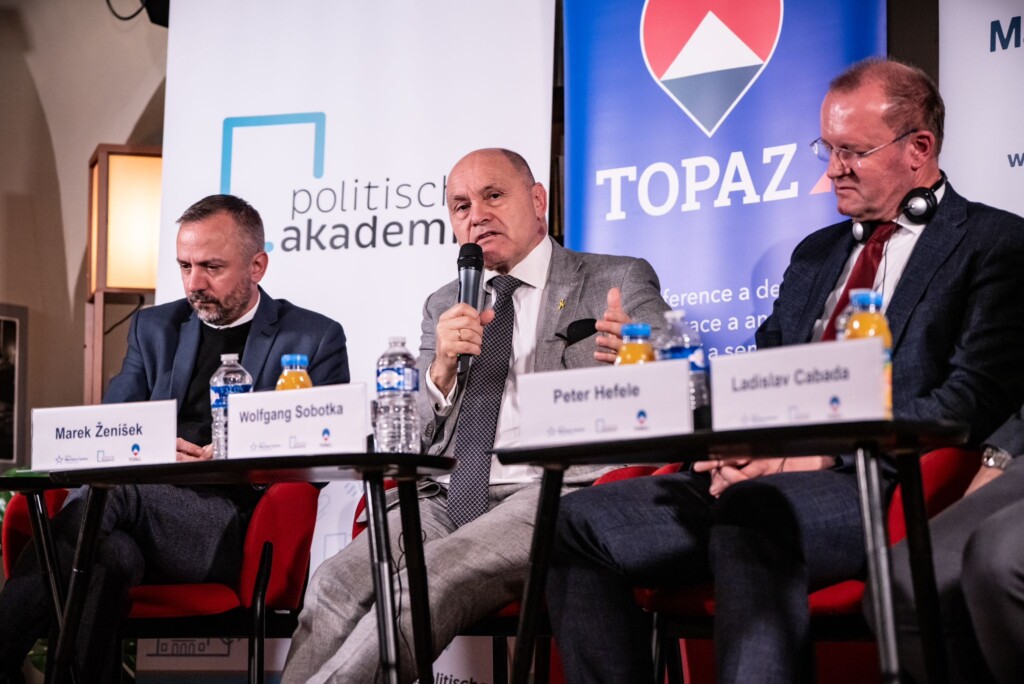
Our guests were Marek Ženíšek, Minister for Science, Research and Innovation of the Czech Republic and Director of the TOPAZ think tank, Wolfgang Sobotka, President of the Political Academy of the Austrian People's Party, Peter Hefele, Political Director of the Wilfried Martens Centre for European Studies and Ladislav Cabada, Vice-Rector of the Metropolitan University Prague.
In the debate it was mentioned several times how to defend against populism. "We need to explain complex problems to the general public in a simpler way," said Marek Ženíšek in his introduction.
"Populist parties are dangerous because they offer solutions that do not work. It is like a dubious doctor telling you that you will lose 20 kg in one day and be in great shape. That is roughly what populists promise. They will solve all your problems in an instant and miraculously," political scientist Ladislav Cabada warned about the appeal of populism.
Wolgang Sobotka, president of the Austrian ÖVP Political Academy, also pointed to the great threat of political Islam in Austria and mentioned that populists often own the media, which allows them to spread their ideas more effectively. "This is a really big threat to democracy. All this is helping the development of populism here in Austria."
There was also a view of populism on a pan-European level. "When we look at how to counter all this, we need to focus more on local conditions. In the Nordic countries, for example, the difference is quite marginal, which is also due to the economic context," said Peter Hefele, political director of the Brussels-based think tank Wilfried Martens Centre for European Studies.
"I am delighted that we were able to hold today's debate on our democracy and the challenges we face together at the Václav Havel Library, which is celebrating its 20th anniversary this year and was founded by Karel Schwarzenberg, who was also the founder of the TOPAZ think tank. Yesterday was a year since he left us and I dare say that he is very much missed not only in Czech politics. But his legacy lives on - not only in diplomacy, but also in human rights and domestic politics. His statement that indifference is the mother of dictatorship inspires us in TOPAZ in our activities and actions," said TOPAZ Executive Director Eva Šafránková.
Pokud jste debatu nestihli, můžete si ji pustit na tomto odkazu a také se nezapomeňte podívat na naše bonusové video.